Jackery Explorer V2
Hey everyone,
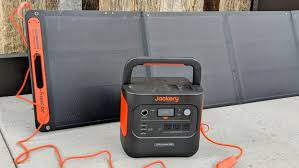
A few weeks back, I purchased a shiny new Jackery Explorer 2000 v2 bundled with the 500W solar panel kit (the big folding array made of six separate panels with hinges for that accordion-style setup). My 1st attempt at charging. I was a bit disappointed because it was charging pretty slowly from solar, even in decent light. There was some partial shade from a railing, and I was only pulling around 125W total in that accordion configuration.
Fast forward to today—we finally got some clear, strong sun here in the Bay Area, so I dragged everything out and ran a bunch of controlled experiments. Thought I'd share the results in case anyone else is debating this setup or troubleshooting slow solar charging.
Key Takeaways from my Tests
-
Individual panel performance Each of the six panels (they're roughly 85W-rated each) hit up to 88W on the front side when angled optimally straight at the sun with zero obstructions. That's solid—88W × 6 = 528W theoretical max, which actually exceeds the labeled 500W rating (nice headroom for real-world losses).
-
Bifacial bonus The back side generates a respectable ~70W per panel in good conditions—definitely worth flipping them if you can catch reflected light (e.g., off concrete or light ground cover).
-
Flat on the ground? Big drop-off When lying completely flat (no tilt), output falls to about 40W per panel—less than half of peak. Tilt is essential if you want meaningful charging.
-
Partial shade is the real killer Even minor shading (railing shadow, tree branch, overhang, etc.) tanks production hard. In one test, a fractional shadow dropped a panel down to ~15W or less. More importantly: when panels are connected in series (like the default accordion chain), a partially shaded panel drags down the entire string significantly.
Pro tip I discovered: Disconnect any partially shaded panel(s). Removing the weak link actually increased total output in shaded scenarios. (This makes sense with how series wiring and bypass diodes work, but it's dramatic in practice.)
-
Best configuration so far: ~400W peak By carefully positioning and angling all six panels independently (not hinged together), I hit around 400W consistently in full sun. Getting all of them perfectly oriented at once is tough without some kind of custom frame or stand—on grass or uneven ground, it's a juggling act. The hinged accordion fold is convenient for storage/transport, but it's clearly suboptimal for max power unless the sun is directly overhead and unobstructed.
-
Orientation matters a ton East-west spread (panels facing different directions) performed much worse than grouping them all south-facing (assuming Northern Hemisphere). Stick to one optimal direction.
Bottom Line
Yes, you can realistically achieve (or come very close to) the advertised 500W output—but it requires near-perfect conditions: full direct sun, optimal tilt on every panel, zero shade anywhere on any cell, and ideally some independent angling. In everyday real-world use (camping, RV parking, backyard testing with trees/buildings nearby), expect more like 300–400W most of the time, and much less if there's any partial shading.
The panels themselves seem high-quality, and the bifacial design + individual usability are big pluses. But if max solar input speed is critical for your setup (e.g., recharging a 2000Wh battery quickly), plan around ideal placement or consider supplementing with AC/grid when possible.
Hope this helps someone avoid the same head-scratching I did at first. Has anyone built a simple frame or stand to angle these better? Or found tricks for dealing with dappled shade? Would love to hear your experiences in the comments!